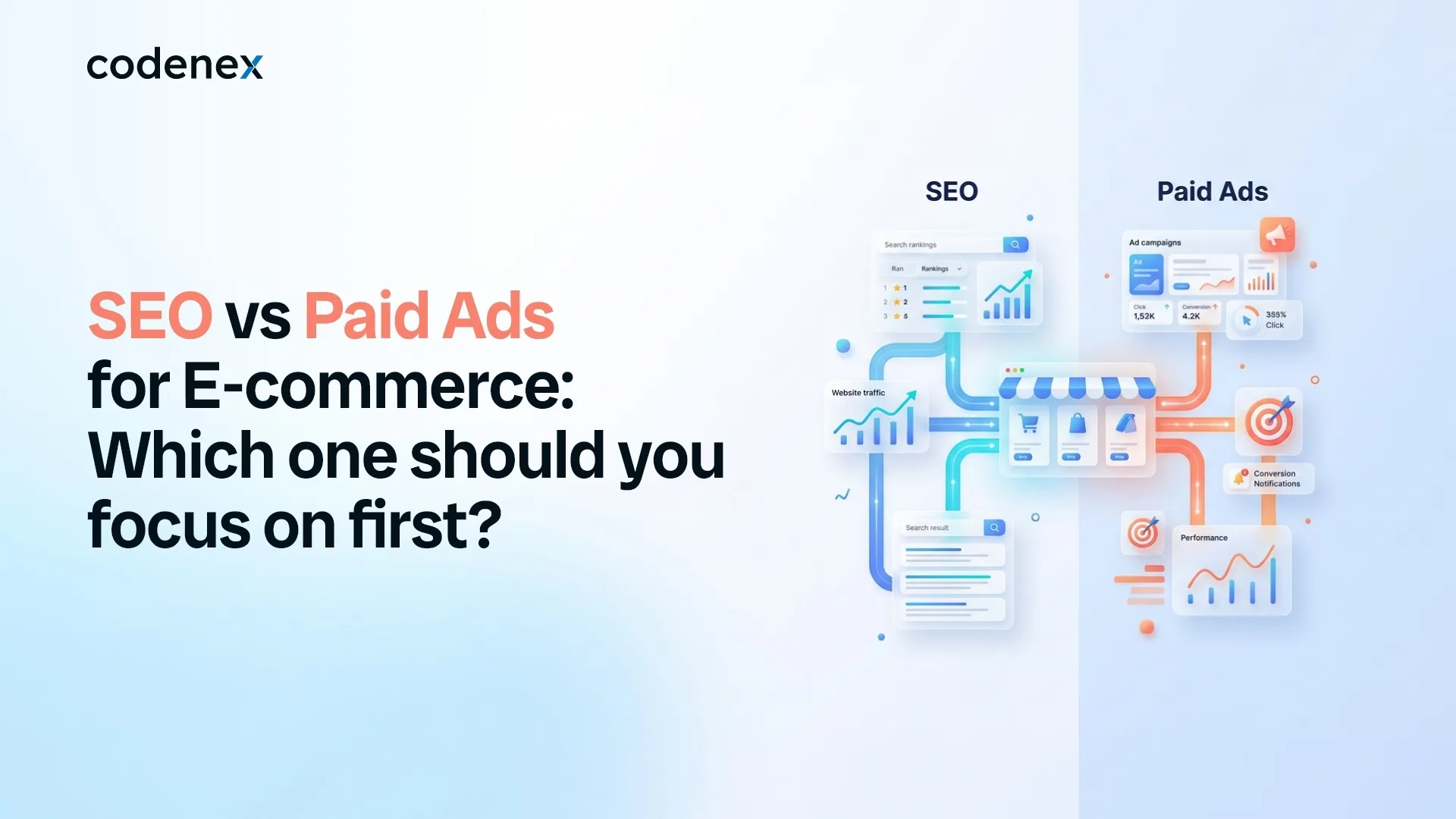
When comparing SEO vs paid ads for ecommerce, both channels can generate sales, but they work in very different ways. Choosing the right starting point depends on your current stage, budget, competition, and long-term growth goals.
Understanding the Difference
SEO Builds Long-Term Visibility
SEO helps your store appear in organic search results when customers search for products or solutions related to what you sell.
Instead of paying for every click, you build pages that attract traffic over time.
SEO is ideal for:
- Sustainable growth
- Lower long-term acquisition costs
- Brand authority
- Consistent traffic
- Product discovery through search
It often takes time, but the value compounds.
Paid Ads Create Immediate Opportunities
Paid advertising on platforms like Google and Meta can place your products in front of buyers quickly.
Ads are ideal for:
- New product launches
- Seasonal campaigns
- Fast traffic generation
- Testing offers
- Reaching specific audiences
Results can come faster, but traffic usually stops when campaigns stop.
Which Is Better for New E-commerce Stores?
If your store is new and needs immediate visibility, paid ads may help you generate early traffic and collect data.
You can learn:
- Which products get clicks
- Which audiences respond
- What messaging works
- Which offers convert
This insight can later strengthen your SEO strategy as well.
Which Is Better for Established Stores?
If your store already has some traction, SEO can become a powerful growth engine.
As product pages, category pages, and content begin ranking, you reduce dependence on ad spend and build stronger long-term returns.
The Hidden Cost of Choosing Only One
Some brands depend only on ads and struggle with rising costs.
Others depend only on SEO and miss immediate revenue opportunities.
Growth becomes stronger when both channels support each other.
For example:
- Ads generate fast traffic while SEO builds rankings
- SEO reduces long-term acquisition costs
- Paid campaigns retarget SEO visitors
- Search data from ads informs keyword strategy
What Smart Brands Usually Do
They start with the channel that solves the current business problem.
If sales are urgent → ads may come first.
If growth needs sustainability → SEO may come first.
If budget allows → both together often perform best.
What Many Owners Overlook
This is not a battle between SEO and ads.
It is about timing, balance, and business goals.
The most successful e-commerce brands usually evolve into using both strategically rather than relying on one source forever.
Need Help Choosing the Right Growth Path?
If you are unsure where to invest first, the right decision can save time and budget.
We help e-commerce brands build practical growth strategies using SEO, paid ads, or a combination tailored to business stage and goals.