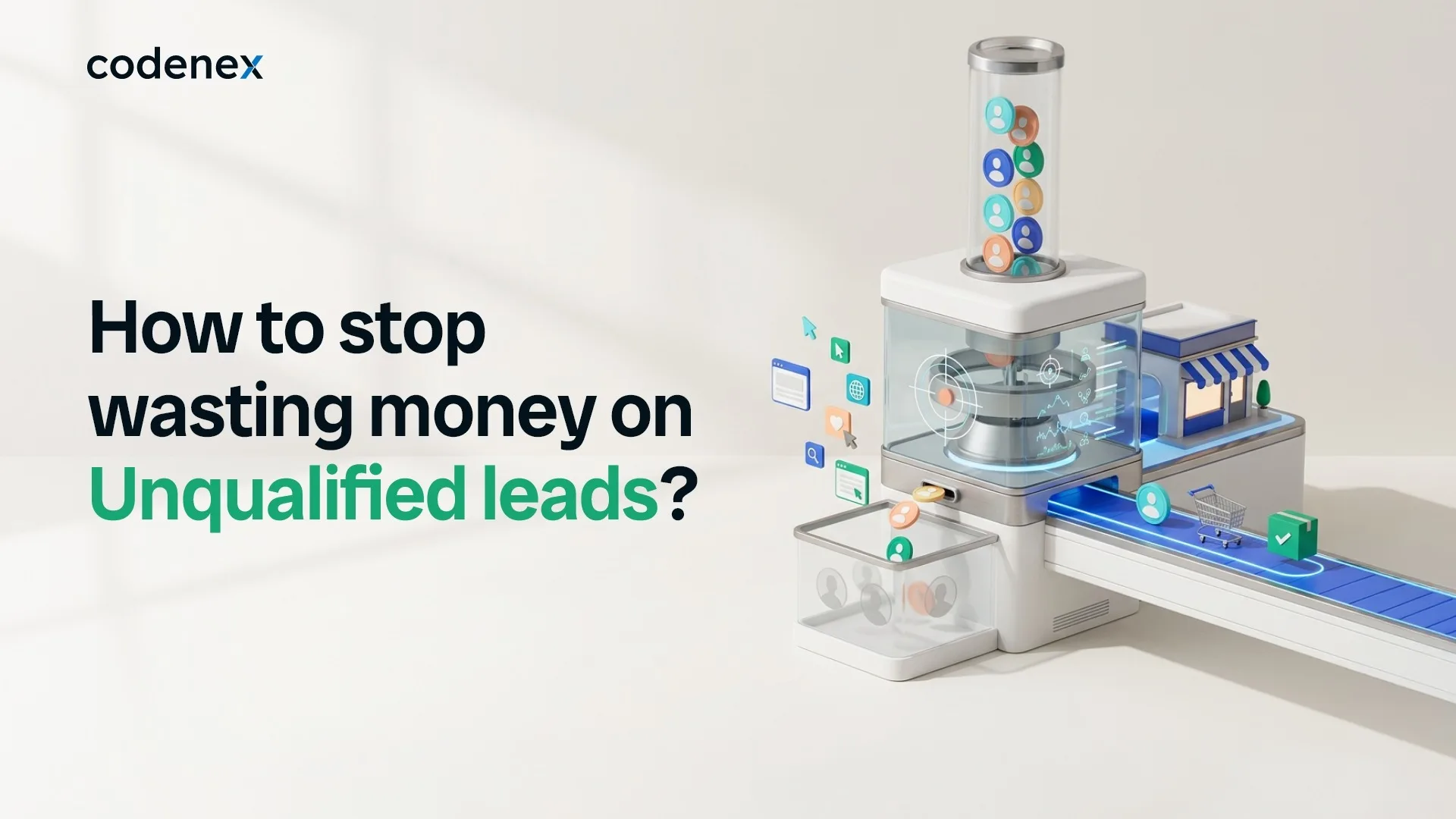
Getting leads is exciting until your sales team starts receiving enquiries from people who are not interested, cannot afford your service, or were never the right audience in the first place.
For many businesses, the problem is not generating enough leads. It is generating the right leads. Spending more money on advertising will not solve a targeting or conversion problem. In fact, it can make the problem more expensive.
A smarter digital marketing strategy focuses on attracting people who genuinely need what your business offers and are more likely to become paying customers.
1. Understand Why Your Leads Are Unqualified
Before changing your campaigns, find out where the problem begins. Not every poor-quality lead comes from the same source.
Your business may be attracting unqualified leads because:
- Your targeting is too broad.
- Your keywords are not specific enough.
- Your advertisements promise more than the service provides.
- Your landing page does not clearly explain the offer.
- Your form collects too little information.
- Your campaign is optimized for volume instead of lead quality.
- Your message is reaching people who are curious but not ready to buy.
Look at your recent enquiries and identify common patterns. If many leads are asking for something your business does not provide, your campaign needs better qualification.
2. Target the Right Audience, Not Everyone
A larger audience is not always a better audience.
Effective lead generation starts with identifying your ideal customer. Consider factors such as location, industry, job role, interests, purchasing needs, budget, and intent.
For example, if you provide professional business services, targeting anyone interested in “business” may generate plenty of clicks but very few serious enquiries.
A more focused audience can reduce wasted spending and improve the chances of reaching people who actually need your solution.
The goal is simple: reach fewer irrelevant people and more potential customers.
3. Make Your Ads Qualify Leads
Your advertisement is not just there to attract attention. It should also help filter your audience.
Be clear about what you offer, who it is for, and what the customer can expect. Avoid vague messages that encourage people to click simply because they sound attractive.
You can qualify prospects by clearly mentioning:
- The service or product offered
- The target customer
- Location or service area
- Key requirements
- Starting price, when appropriate
- Main benefits
- A clear next step
When your ad gives people the right information before they click, those who are not a good fit are more likely to move on, saving your budget for stronger prospects.
4. Improve Your Landing Page and Lead Forms
Imagine paying for a high-quality click and then losing the potential customer because your landing page is confusing.
Your landing page should continue the same message used in your advertisement. Visitors should immediately understand what you offer and why they should contact you.
Keep the page focused and make the next step obvious.
Your lead form can also help with qualification. Instead of asking only for a name and phone number, consider including useful questions such as:
- What service are you interested in?
- What is your business requirement?
- What is your preferred budget range?
- When do you plan to start?
- What location are you targeting?
The right questions can help your sales team understand whether a lead is worth pursuing before spending significant time on it.
5. Stop Measuring Success by Lead Count Alone
One of the biggest mistakes businesses make is celebrating every lead equally.
Getting 100 leads sounds better than getting 30, but what if only five of those 100 are genuinely interested?
Instead of focusing only on lead volume, track metrics that show actual business value:
- Qualified leads
- Sales opportunities
- Conversion rate
- Cost per qualified lead
- Customer acquisition cost
- Sales generated
- Return on ad spend
A campaign producing fewer but better leads can be far more profitable than a campaign generating hundreds of irrelevant enquiries.
Quality should become a key performance indicator, not an afterthought.
6. Connect Marketing With Sales
Your marketing team may believe a campaign is performing well because leads are coming in, while your sales team may be frustrated because those leads are not converting.
This gap needs to be addressed.
Create a clear feedback loop between marketing and sales. Your sales team should regularly report which leads are qualified, which are irrelevant, and why certain prospects did not move forward.
This information can then be used to improve targeting, advertisements, keywords, landing pages, and audience strategies.
At Codenex, we help businesses create digital marketing campaigns focused on attracting relevant traffic, quality leads, and measurable business results. From SEO and Google Ads to social media marketing and conversion-focused websites, our approach goes beyond simply increasing numbers.