AI agents are quickly becoming one of the most talked-about technologies in modern software systems.
From automating customer support to managing infrastructure and workflows, AI agents have the potential to significantly improve operational efficiency.
But not every business needs AI agents.
And more importantly, not every business is ready for them.
The real question is:
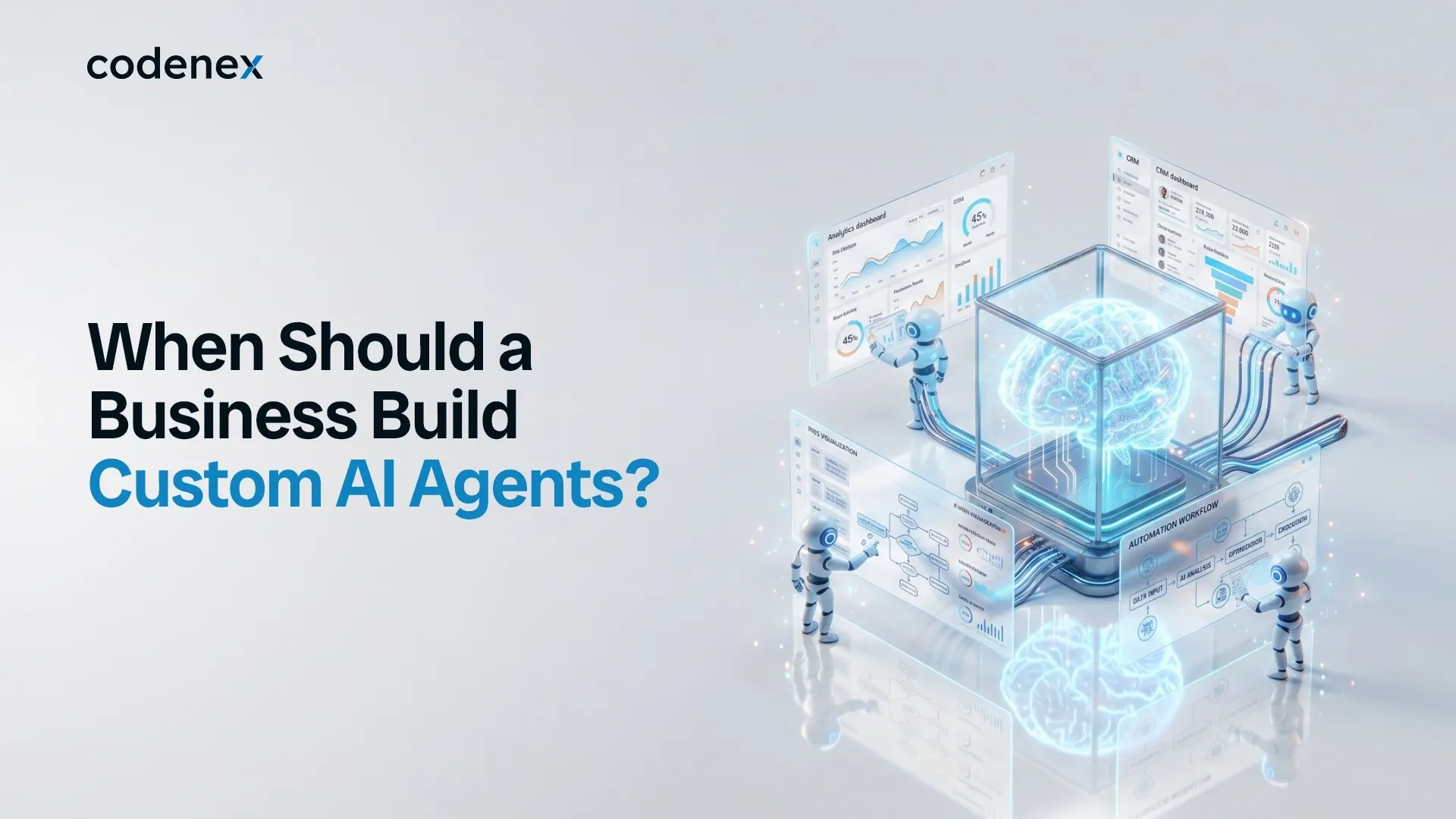
When does it actually make sense to build custom AI agents?
In this article, we’ll break down the practical decision framework businesses can use to evaluate whether AI agents are the right investment.
Understanding the Real Value of AI Agents
Before deciding whether to build AI agents, it’s important to understand what they actually offer.
Frameworks like OpenClaw AI agent framework enable systems that can:
- monitor operations
- analyze context
- make decisions
- execute actions automatically
This goes beyond basic automation.
AI agents allow businesses to move toward autonomous operational systems.
However, the value of this depends heavily on the nature of your business.
When AI Agents Make the Most Sense
1. When You Have Repetitive Operational Workflows
If your business relies on repetitive processes such as:
- handling support tickets
- processing leads
- monitoring systems
- managing data flows
AI agents can significantly reduce manual effort.
These workflows are ideal candidates because:
- They follow patterns
- They generate large volumes of tasks
- They require ongoing monitoring
2. When Your Systems Generate High Volumes of Events
AI agents thrive in environments where systems constantly produce signals.
Examples include:
- SaaS platforms
- e-commerce systems
- logistics platforms
- financial applications
If your business generates:
- frequent alerts
- customer interactions
- system events
AI agents can process and respond to these events in real time.
3. When Decision-Making Slows Down Operations
In many companies, operations slow down because decisions require human intervention.
Examples include:
- prioritizing support tickets
- qualifying leads
- responding to system issues
- managing workflows
AI agents can evaluate situations and make decisions faster, reducing bottlenecks.
4. When You’re Scaling Operations
As businesses grow, operational complexity increases.
Without automation, scaling often requires:
- hiring more staff
- increasing operational overhead
- managing larger teams
AI agents allow businesses to scale operations without proportional increases in cost.
5. When Downtime or Delays Are Costly
In industries where downtime or delays have a financial impact, AI agents can provide immediate value.
Examples include:
- SaaS platforms
- e-commerce businesses
- fintech systems
- high-traffic applications
AI agents can detect and respond to issues instantly, reducing risk.
When AI Agents May Not Be Necessary
AI agents are powerful, but they are not always the right solution.
They may not be necessary if:
- Your workflows are simple and predictable
- Your operations are low in volume
- Manual processes are still manageable
- Traditional automation already solves the problem
In such cases, simpler automation tools may be more cost-effective.
Build vs Buy: Should You Use Existing Tools?
Many businesses ask whether they should:
- Use existing automation tools
- adopt AI platforms
- build custom AI, agents
The answer depends on your requirements.
Use Existing Tools If:
- Your workflows are simple
- integrations are standard
- Customization is minimal
Build Custom AI Agents If:
- workflows are complex
- Decisions require context
- Systems need deep integration
- Automation needs to scale
Custom AI agents provide flexibility and long-term scalability.
Cost Considerations
Building AI agents is not just a technical decision; it’s a business investment.
Costs may include:
- development and engineering
- infrastructure and hosting
- AI model usage
- system integration
- ongoing maintenance
However, the ROI can be significant when:
- Operational costs are reduced
- processes are automated
- efficiency improves
- errors are minimized
The key is to evaluate whether the long-term value outweighs the initial investment.
A Practical Decision Framework
Businesses can use the following framework to evaluate whether AI agents make sense:
You should consider AI agents if:
- You have repetitive, high-volume workflows
- Your systems generate continuous events
- Decision-making is slowing operations
- You are scaling rapidly
- Operational inefficiencies are impacting growth
You should delay if :
- Workflows are simple
- Automation needs are minimal
- Business processes are still evolving
The Strategic Advantage of Early Adoption
AI agents are still an emerging technology.
This creates a unique opportunity.
Businesses that adopt AI agents early can:
- gain operational efficiency
- build competitive advantages
- reduce long-term costs
- create scalable systems
Over time, AI-driven operations may become the standard.
Early adopters will be better positioned to lead.
Essential Insights
AI agents are not a universal solution, but they can be transformative for the right businesses.
The decision to build AI agents should be based on:
- operational complexity
- workflow volume
- scalability needs
- business goals
When implemented correctly, AI agents can significantly improve efficiency and enable businesses to operate at scale.
Ready to Explore AI for Your Business?
AI agents can unlock significant operational efficiency, but only when implemented strategically.
If you’re evaluating whether AI agents or OpenClaw-based systems make sense for your business, the engineering team at Codenex can help you assess, design, and implement a solution tailored to your workflows.
👉 Explore our services
👉 Visit Codenex